Encofrado trepador hidráulico automático GETO
As a global leader in the formwork and scaffolding sector, GETO has set a new technical benchmark within the industry with the introduction of its GTP100 Fully Automatic Hydraulic Climbing Formwork System.
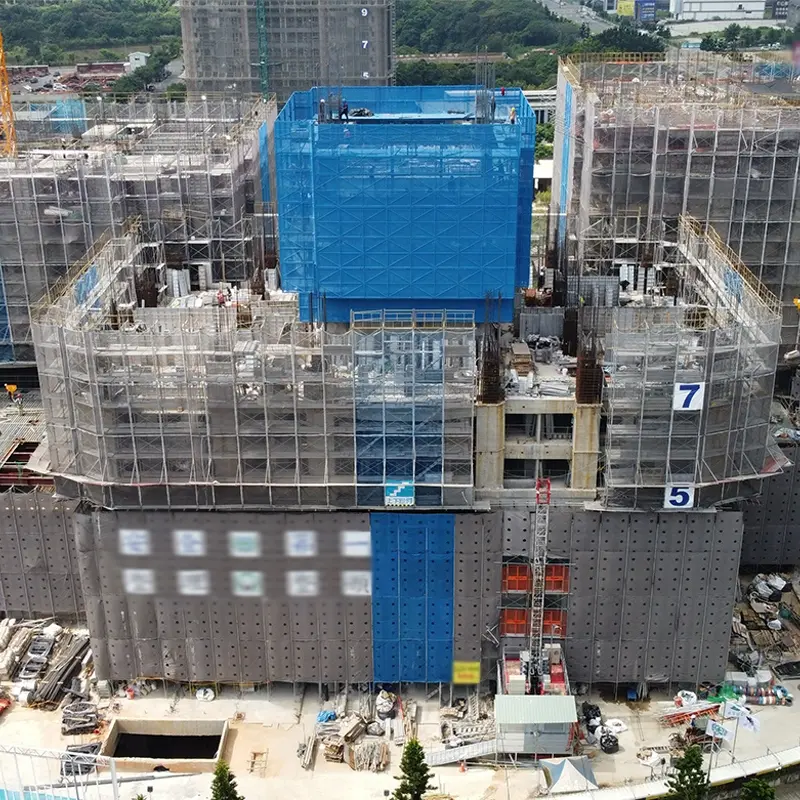
Features of the GTP100 System
· Fully Hardened Steel Design: The scaffolding frame undergoes a full steel hardening treatment, ensuring exceptional structural stability. It not only possesses strong resistance to deformation but also offers superior fire resistance.
· Innovative Formwork Retraction Mechanism: Equipped with a precision formwork retraction device, the system effectively minimizes risks during formwork stripping while preventing concrete slurry leakage, thereby maintaining a clean and tidy construction site.
· Modular Platforms: All operating platforms feature modular steel decking, facilitating easy transportation and installation while ensuring a non-slip, durable surface.
· Intelligent Advantages
GETO's system supports two climbing modes: vertical and inclined (up to ±10 degrees). The hydraulic system achieves precise synchronization, ensuring a silky-smooth climbing process. Furthermore, the rebar installation platform moves in sync with the climbing frame structure, enabling a seamless transition between rebar tying and concrete pouring operations.
Why Choose GETO?
GETO provides a one-stop solution encompassing everything from design and manufacturing to on-site technical guidance. Our Automatic Hydraulic Climbing Formwork requires no tower cranes for hoisting and eliminates the need for external scaffolding; formwork adjustment and cleaning are performed directly on the climbing frame itself. This truly delivers on the promise of being dddhhhworry-free, time-saving, and cost-effective.dddhhh
GTP100 System Technical Parameters
The following table outlines the core technical specifications for the GTP100 fully automatic hydraulic climbing formwork system:
| S/N | Item | Specification |
| 1 | Lifting Capacity (Single-Unit Climbing Platform) | 100kN |
| 2 | Segmented Standard Pouring Height | 3.0m to 5.5m |
| 3 | Maximum Climbing Speed | 5 minutes per meter |
| 4 | Influence Width per Bracket | About 4 meters |
| 5 | Working Platform Width | 2.4 meters |
| 6 | Max Inclination | Plus or Minus 10 degrees |
| 7 | Driving Force | Hydraulic Power |
| 8 | Compatible Wall Formwork | Aluminium / Steel / Timber-Beam |
Applicable Projects (Applications)
This high-end formwork system is particularly well-suited for the following scenarios:
· Super-high-rise Building Core Walls: Enables dddhhhcore-firstdddhhh construction, driving the subsequent construction of the peripheral structure.
· High-rise Residential and Office Buildings: Facilitates rapid turnover cycles, thereby shortening the investment payback period.
· Bridge Towers/Pylons: Handles the construction of massive cable towers for cable-stayed or suspension bridges, adapting seamlessly to changes in inclination.
· Infrastructure Projects: Such as Liquefied Natural Gas (LNG) storage tanks, large-scale chimneys, or grain silos.
FAQ
Q1: How does automatic hydraulic climbing formwork work?
A: It utilizes the power of hydraulic cylinders to enable the guide rails and structural frame to climb alternately along the concrete wall surface via attached brackets, eliminating the need for external hoisting equipment.
Q2: What is hydraulic climbing formwork used for?
A: It is primarily used for the construction of concrete structures featuring vertical or inclined facades, such as high-rise residential buildings, commercial towers, bridge pylons, and core walls.
Q3: Is climbing formwork safer than traditional formwork?
A: Yes. It features built-in, fully enclosed protective screens and multiple mechanical anti-fall devices, which significantly reduce the risk of personnel or objects falling during high-altitude operations.
Q4: Does it require a crane?
A: A tower crane is required during the initial installation and final dismantling phases; however, throughout the entire climbing process during the main structural construction, no tower crane assistance is needed whatsoever.
Q5: What is the difference between climbing formwork and scaffolding?
A: Scaffolding primarily provides access for personnel and typically requires erection from the ground up or attachment layer by layer; climbing formwork, conversely, is a powered system that integrates the formwork function, rising autonomously in tandem with construction progress to deliver superior efficiency.